
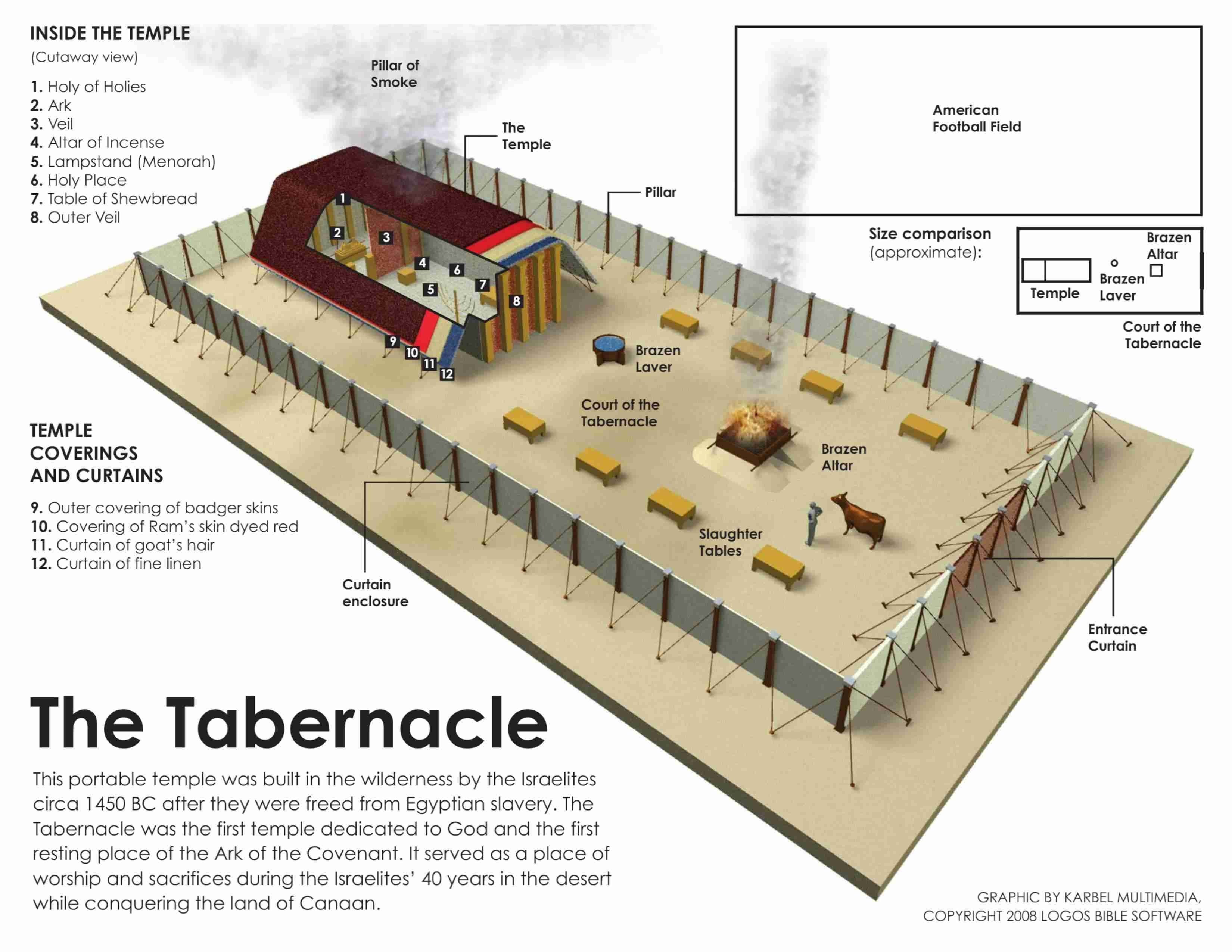
Exodus is often considered the book of the law, covenants, or redemption. It’s the second book in the Pentateuch as the Greeks understood it, the Torah as the Hebrews understood it, or the books of Law/Instruction. The general themes captured include God keeping His promises to Abraham (Genesis 12:1-3) and continuing the fulfilment of the seed foretold in Genesis 3:15. God miraculously delivers His people from slavery using the foolish and weak things of the world 1, begins redemption with Christ foretold in the Passover Lamb (Exodus 12), and gives the Children of Isreal laws for living justly and peacefully with one another (by the way, the idea of ethics and justice we have today stems from the Bible). God then institutes the temple, its components, and the office of the priest, teaches them how they ought to fellowship with Him, and dwells among them. All through this process, the people still forget God and seek idols. Oh, the mercy!
Exodus has shown me God’s extreme precision in designing how He will dwell among His chosen people and how they will interact with one another and with Him. He truly loves us and wants the greatest good for us; ergo, communion with Him.
“I will dwell among the people of Israel and will be their God. And they shall know that I am the Lord their God, who brought them out of the land of Egypt that I might dwell among them. I am the Lord their God.” —Exodus 29:45-46.
In this book, the Mosaic covenant was also instituted with some conditions the children of Isreal agreed to keep (Exodus 24:7), unlike the unconditional Adamic, Noahic, and Abrahamic covenants, with the Sabbath being the primary sign (Exodus 31:13). In further books, I believe we will see how the Children of Isreal fail to keep these conditions and how some thing/one greater is needed to save them and us from the curses (wrath of God) they rightly heaped upon themselves.
Irrespective of our deficiencies, God calls those He will use and equips them to execute His call. The execution will also be according to God’s prescription, as reflected in the 10 Commandments, which we must follow. Even the theology of work, as seen in God filling people with skill and intelligence (Exodus 35, 36), carries the same message. There’s so much to learn from this book about God and how that affects the way we, as 21st-century Christians, should live. Moses will call this, “Show me Your ways”. God’s ways are revealed in His laws, and we need to see God’s ways to live properly and grow in intimacy with our Father.
The law leads to Christ and Christ leads us back to the law. It leads to Christ as the redeemer and Christ leads to the law, as the leader and director of life. —Francis Turretin.
Lastly, one notable connection I saw was the use of fragrances and spices in temple worship (Exodus 30, 31) and Apostle Paul's reference to Christians as the fragrance of Christ in the New Testament. The veil is truly torn, and we are now the temple in which God lives 2. Oh the mercy! Hallelujah!
14 But thanks be to God, who in Christ always leads us in triumphal procession, and through us spreads the fragrance of the knowledge of him everywhere. 15 For we are the aroma of Christ to God among those who are being saved and among those who are perishing, 16 to one a fragrance from death to death, to the other a fragrance from life to life. Who is sufficient for these things? 17 For we are not, like so many, peddlers of God's word, but as men of sincerity, as commissioned by God, in the sight of God we speak in Christ. — 2 Corithians 2:14-17.
In the chart below, I tried to document some of the attributes of God I see reflected through each chapter of Exodus. While this is an inexhaustive list, it attempts to capture who God is as reflected through the history of redemption, showing how God has never changed, even in our age now, showing the same attributes. It might interest you to note that the most recurring attributes were Sovereign, Giver of Precise Instructions, Powerful, Orderly, Patient, and Merciful.
18 For the word of the cross is folly to those who are perishing, but to us who are being saved it is the power of God. 19 For it is written,
“I will destroy the wisdom of the wise,
and the discernment of the discerning I will thwart.”
20 Where is the one who is wise? Where is the scribe? Where is the debater of this age? Has not God made foolish the wisdom of the world? 21 For since, in the wisdom of God, the world did not know God through wisdom, it pleased God through the folly of what we preach[b] to save those who believe. 22 For Jews demand signs and Greeks seek wisdom, 23 but we preach Christ crucified, a stumbling block to Jews and folly to Gentiles, 24 but to those who are called, both Jews and Greeks, Christ the power of God and the wisdom of God. 25 For the foolishness of God is wiser than men, and the weakness of God is stronger than men.
26 For consider your calling, brothers: not many of you were wise according to worldly standards, not many were powerful, not many were of noble birth. 27 But God chose what is foolish in the world to shame the wise; God chose what is weak in the world to shame the strong; 28 God chose what is low and despised in the world, even things that are not, to bring to nothing things that are, 29 so that no human being[d] might boast in the presence of God. 30 And because of him you are in Christ Jesus, who became to us wisdom from God, righteousness and sanctification and redemption, 31 so that, as it is written, “Let the one who boasts, boast in the Lord.” —1 Corinthians 1:18-31.
“Do you not know that you are God’s temple and that God’s Spirit dwells in you?” —1 Corinthians 3:16.